Starting with a bit of its incredible history, "Santurantikuy" is a mixture of Spanish and Quechua words that translates as "Venta de Santos"; Like its name, Santurantikuy is a complex process of synthesis of cultures, the Andean and the European colonial.
It does not have a clear date of the beginning of this celebration, it is said that it originated in the 16th century, the oldest review with a reference to Santurantikuy dates from 1834 and it is not called by this name. Despite this certain mystery, what we know for sure is that the Santurantikuy is a Spanish creation from the colonial era, imposed in order to evangelize the Peruvian natives, because as its name says, images of Saints have been sold since ancient times. Catholics on the stairs of the Cathedral of
Cusco.
Among the Saints that are offered and offered, the protagonist is the "Niño Manuelito". This is neither more nor less than the Child Jesus, the name Manuelito comes from a tender variation of "Emmanuel", as the child Jesus is also known according to the Catholic tradition, who in
Peru came to be Castilianized as Manuel.
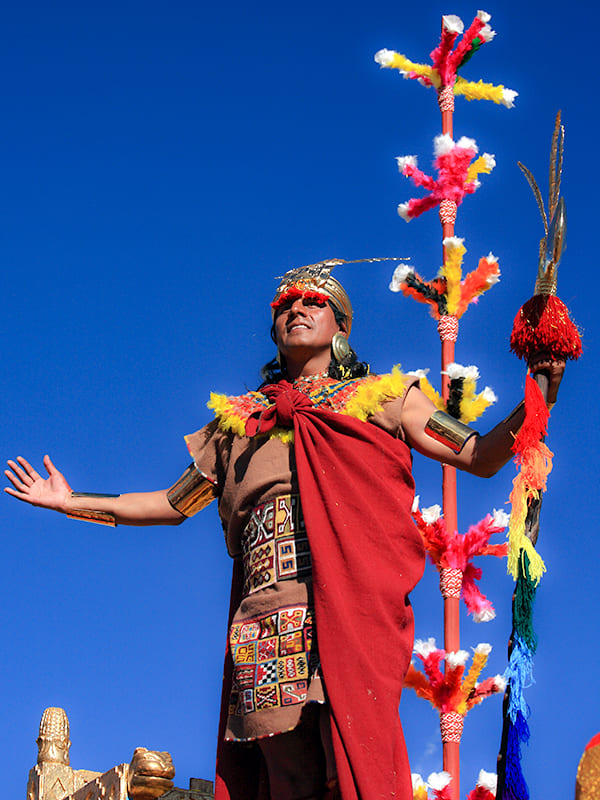
The Cusco people of the time adopted the concept of the Niño Manuelito as their own in such a way that they dressed him as an Inca king, this practice started from the Jesuits and unleashed indignation in the Catholic Church. Today, the Niño Manuelito continues to be a figure of their own and beloved for the people of
Cusco, especially at Christmas time; in the Santurantikuy you can find hundreds of images and sculptures of Niño Manuelito, in different sizes and designs. The best known and most valued design for its finesse is by Antonio Olave Palomino, who 40 years ago designed the first Niño de la Espina, or Niño Manuelito. The Cusco artist was based on a Vilcabamba tradition.
El Niño Manuelito is extremely important to the people of Cusco and Cusco; it always adorns the traditional nativity scenes and every year it is customary to buy new clothes for the child. The ideal place to find the new outfit of Niño Manuelito is, of course, Santurantikuy, where you will find clothes of different sizes and very varied designs, some traditional and others witty and innovadores.