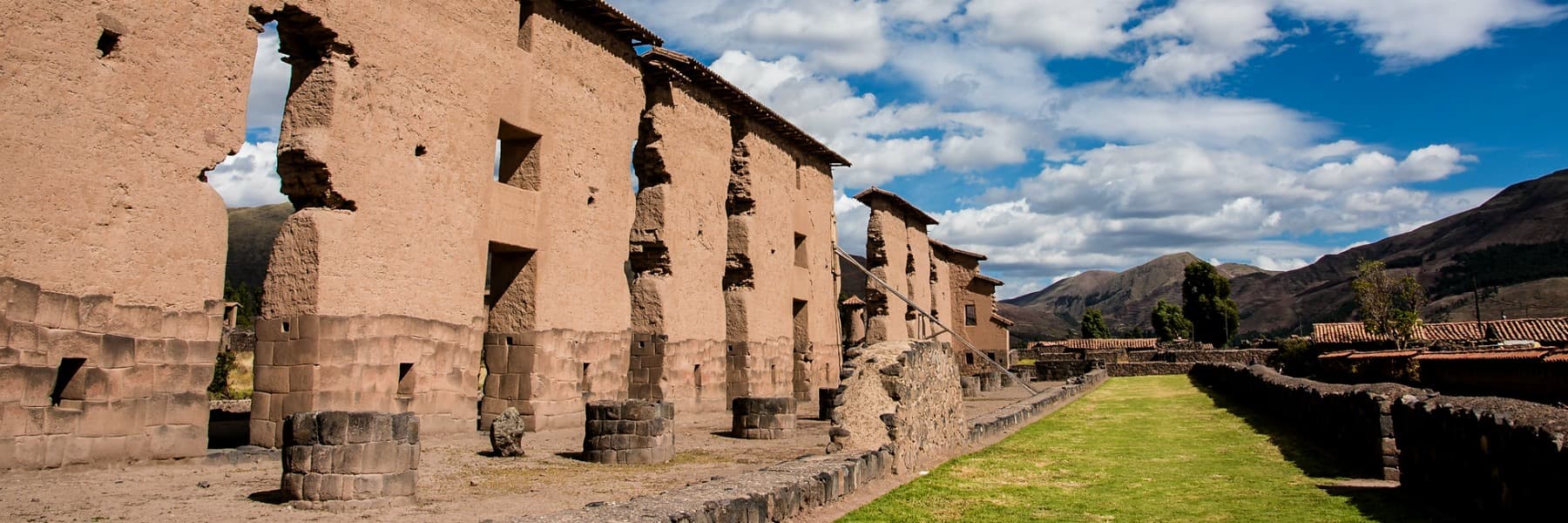


Tour to Queswachaka Inca Bridge & Raqchi Inca Temple 1 Day
 Culture & Adventure

CREATING AUTHENTIC TOURS IN PERU
Discover the Queswachaka Inca Bridge & Raqchi Inca Temple 1 Day
 CREATING AUTHENTIC TOURS IN PERU
Discover the Queswachaka Inca Bridge & Raqchi Inca Temple 1 Day
Trip OverviewTrip Overview
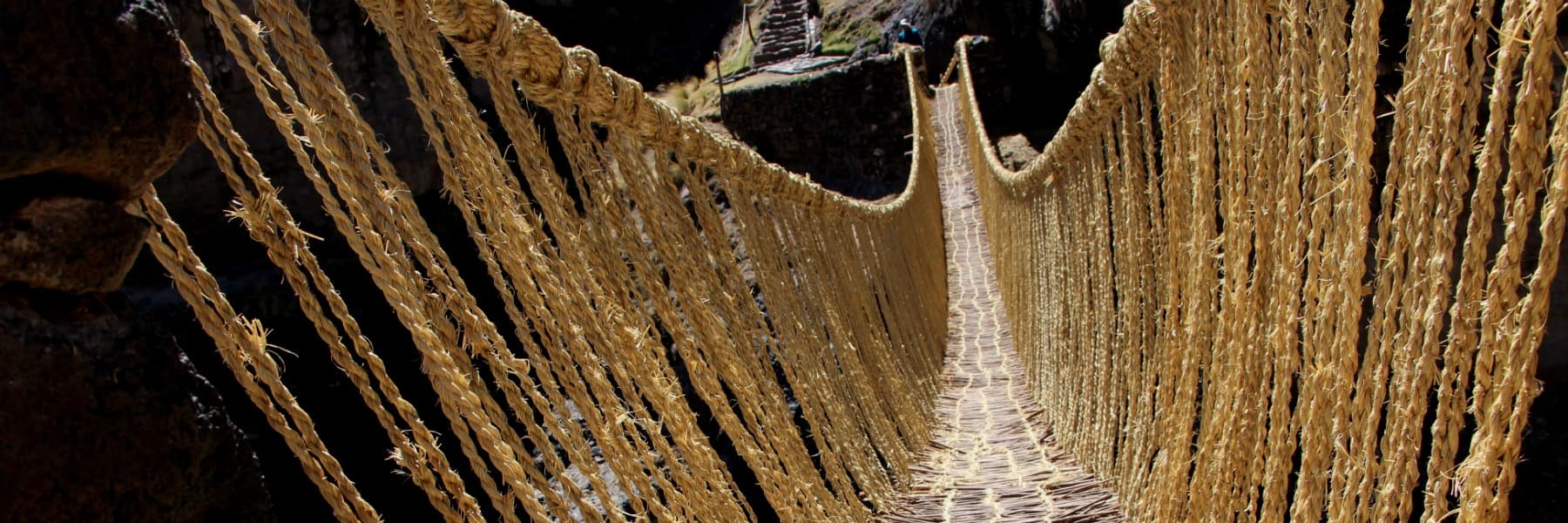
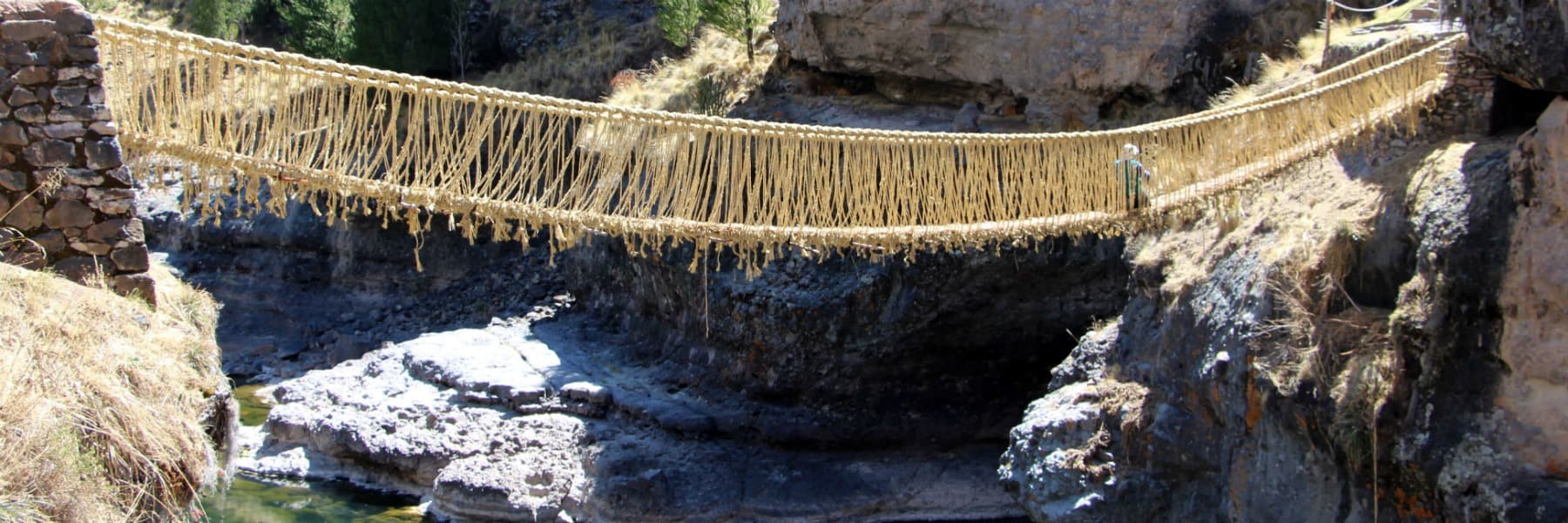
The Inca Bridge of Queswachaka is one of the most important legacies for humanity, which was declared as a World Heritage Site. Since it is the last and only Inca bridge that has survived the Spanish invasion to South America. This bridge is maintained and maintained every year by the six communities of the province of Canas. It is entirely made of straw fibers from the mountains of the Peruvian Andes.
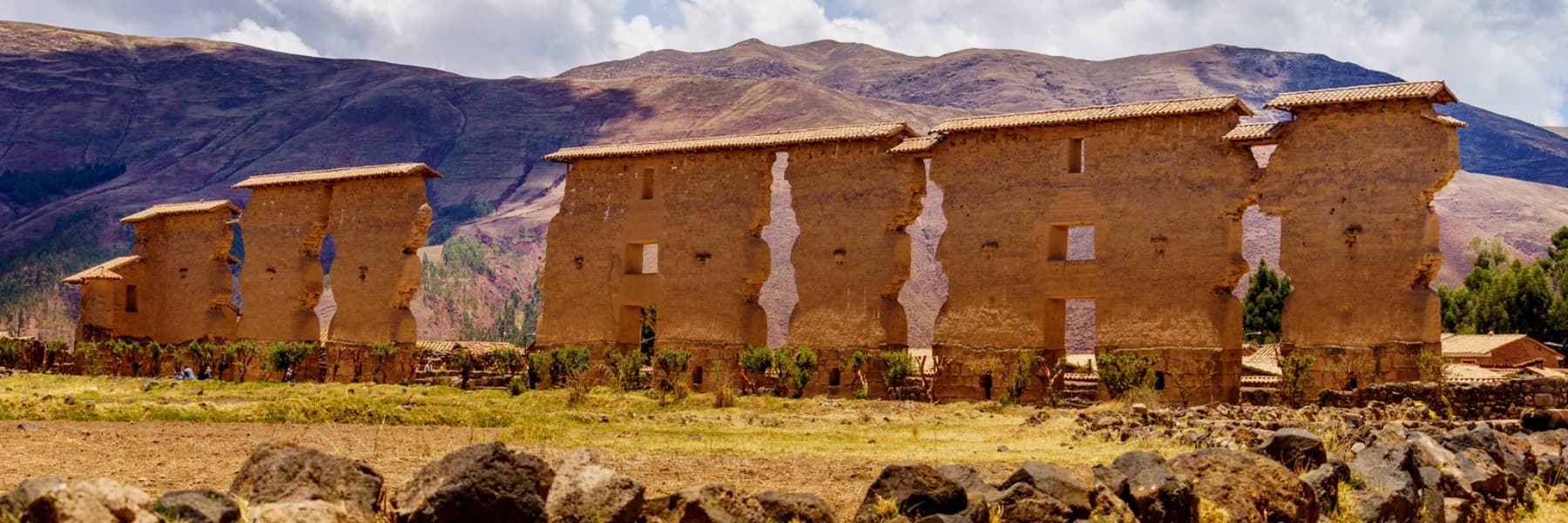
The bridge was built by the Incas to improve communication between the different kings, it was also used for a means of transport through which large caravans of merchants were moving or in cases of emergency the royal army of the Incas. This tour also visits the impressive construction of the Wiraqocha Inca Temple (it is the god creator of the universe, for the Inca-Andean cosmovison) .This temple is located in the town of San Pedro de Raqchi, which is also very famous for its potters who produce the best crafts in clay, such as ceremonial dishes, vessels with symbolic details, since the Inca era.
INCLUDEDINCLUDED
INCLUDED IN THE TOUR TO THE INCA BRIDGE OF QUESWACHAKA & THE INCA TEMPLE OF RAQCHI
- Private transport
- Spanish / English route guide
- 01 breakfast, 01 lunch, 01 snack
- Entrance tickets to the Inca bridge of Queswachaka and the Wiraqocha Temple
NOT INCLUDED
- Extra drinks (bottle of water, soda, others)
- Tips for the travel staff
Trip HighlightsTrip Highlights
- Enjoy a car ride to the last and only Inca bridge still in use on the Apurimac river.
- Visit the ancient temple of the most powerful god that the Andean civilizations "WIRAQOCHA" had in the town of Raqchi.
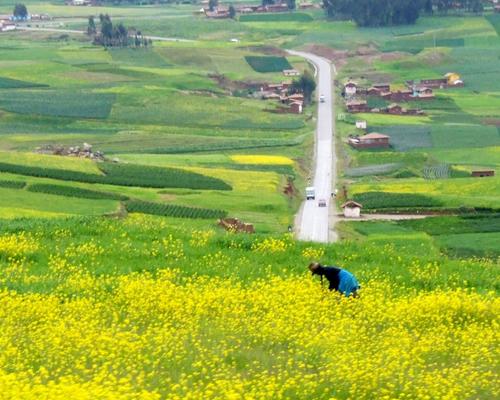
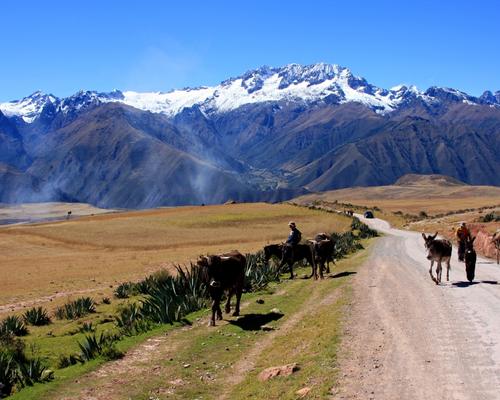
- Contemplate the beautiful fields of potato, corn, quinoa, kiwicha, the whole route is surrounded by farmer villages.
- Get to know the pottery traditions of the people of Raqchi, who have been making beautiful objects since Inca times.
ActivitiesActivities
It is an activity that takes place in a car so it is not very difficult. You will only do short walks when you reach the tourist attractions. The highest height that is reached during the tour is 3,700 meters so it is good to have acclimatized days before in the city of Cusco. The weather is very changing there are days when it is very sunny (max temperature 18 C °) and others very cold in the morning (-5 C °). Solar radiation is very extreme in the Andes of Cusco, so we recommend bringing a good sunscreen.
ItineraryItinerary
PACKING LISTPACKING LIST
WHAT TO BRING TO THE QUESWACHAKA INCA BRIDGE & RAQCHI INCA TEMPLE TOUR
 warm jackets
 Hydration bladder
 wool socks
 camera
 scarf
scarf first aid kit
 hiking shoes
 Dry bags
 Trekking Poles
 sun cream
 Snack
Snack sun hat
 bathing suite
 rain coat
 Sandals
 insect repellent
 Passport
 Down Jackets
 toilet paper
 daypack
 Wool cap
 head lamp
 gloves
 sun glasses
 cap
cap extra cash
 Trekking pants
FAQFAQ
This Inca bridge is located over the Apurímac River, approximately 3,700 meters above sea level in the province of Canas, district of Quehue, about 160 kilometers south of Cusco.
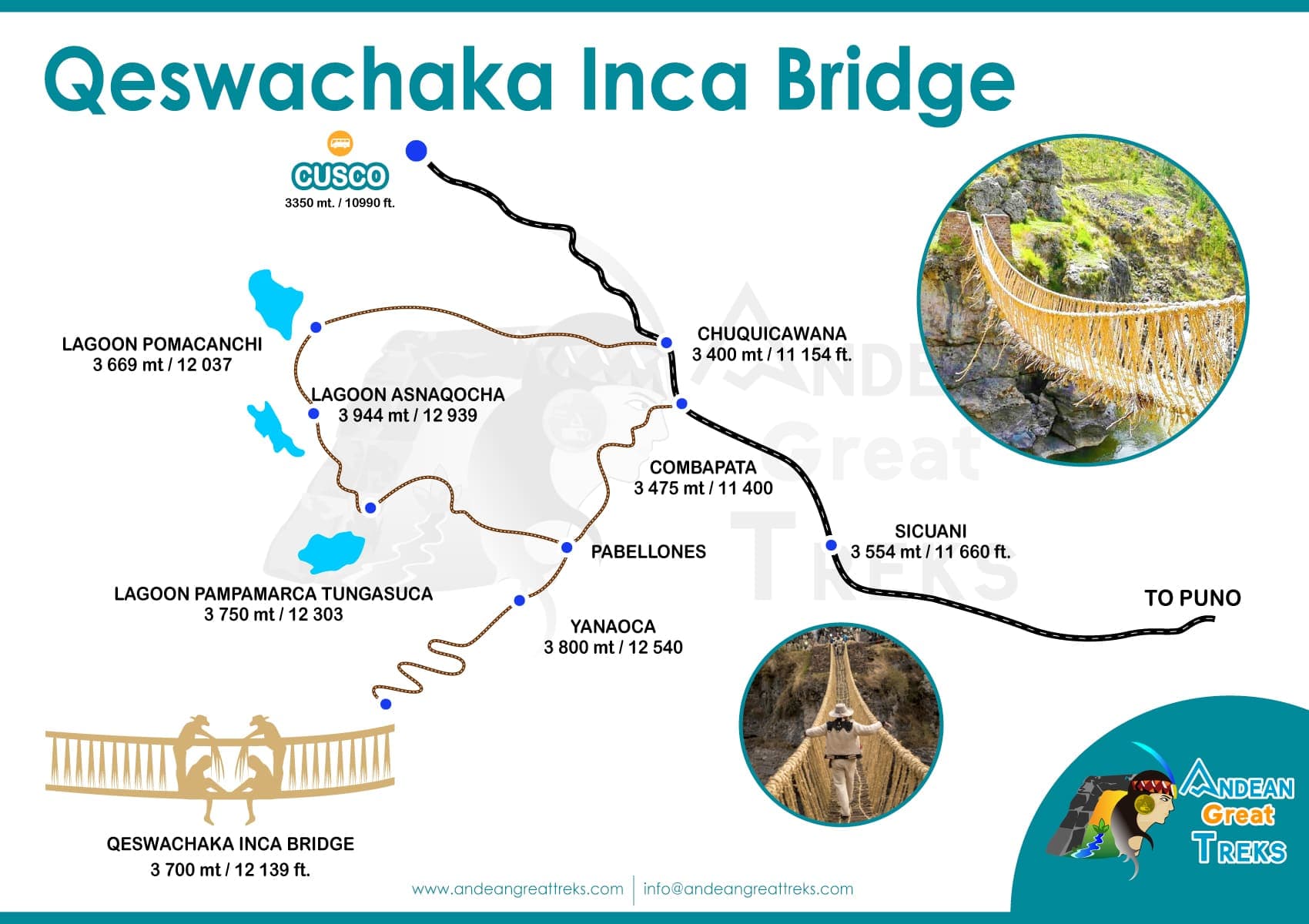
The Inca bridge of Queswachaka is located 160 km south of Cusco. To get there, you have two options: do it with a tourist company or on your own. The first option is the most comfortable. If you prefer to embark on an adventure, you will have to travel from Cusco to Combapata, then from here to Yanaoca and then private vehicles that, in 60 minutes, leave you in Queswachaka.
The province of Canas has a cold climate and has two well-defined seasons:
The rainy season, which includes the months of January to March; in which it is possible to see pluvial presence. Also, the maximum temperature is 15ºC and drops to 5ºC.
The dry season, includes the months of April to December, it is probable to have pluvial presence during these months; but it is quite low compared to the rainy season. It should be noted that, during the months of June to August, the temperature drops to -3ºC; That is why during these months the cold is quite intense.
The name of Queswachaka, comes from the Quechua letters "Queswa" which means Braid and "Chaka" which means Bridge, we can conclude then that it is a Braided Bridge.
The material used to build this suspension bridge is: Ichu of the q'oya variety (vegetable fiber straw), a grass from the highest areas of the Andes. For the base; thin branches called "Kallapos" are also used.
The extraordinary bridge measures 28 meters long and 1.20 meters wide and swings 30 meters above the Apurimac River.
Crossing the Q'eswachaka is like hanging from a rope. It's like being suspended in the air with yourself. It's you, nothing but you, on the air. The feeling is unique. One wobbles on the river. If you have problems with vertigo, crossing this bridge is not the best idea.
If you want to take advantage of the trip to Queswachaka to get to know other tourist attractions in the region, it is a wonderful idea!
On the way from Cusco to Queswachaka you will find four beautiful lagoons: Pomacanchi, Acopia, Asnaqocha and Pampamarca. The landscape that surrounds them and the fish that you can see in them are another of the wonders of Cusco nature.
In addition, just after the last lagoon (that of Pampamarca), is the Pabellones volcano, which with only four meters in height is considered the smallest in the world.
The construction of the Q'eswachaka is attributed to the Inca Pachacuti. It has 600 years of cultural validity."
This was documented in 1609 by the chronicler Inca Garcilaso in his work Royal Comments of the Incas about this and other bridges that have already disappeared that constituted the suspended sections of the ancient Inca road network. Known by the name of Qhapaq Ñan, which in Quechua means "Royal Path".
Qhapaq Ñan, The Great Royal Inca Trail, the Incas built roads everywhere to unite the peoples of the world. The Qhapaq Ñan was built without the use of metal or iron, the wheel, or draft animals and spanned 25,000 miles (40,000 kilometers) throughout the Tawantinsuyo. The road network allowed the Incas to oversee and administer a territory the size of California, Nevada, Arizona, New Mexico, and Texas. This extraordinary network of roads meanders along the Pacific coast of South America, from Quito, Ecuador, to Santiago, Chile, traversing some of the most extreme physical geographies on the planet, from snow-capped 16,000-foot (4,900-meter) peaks to the coast, passing through jungles, grasslands and deserts. Parts of the road system were built by cultures that preceded the Inka Empire, but the Incas perfected the road network into an engineering marvel that supported transportation, communication, and commerce. Inca engineers understood the flow of water, the action of the force of gravity and wind erosion and optimized the design of the road for human and animal pedestrian traffic. An estimated 6% of the Inca road network is still visible, and the existing roads, which continue to be used and maintained by indigenous Andean communities today, are being studied to understand Inca engineering techniques and their application. to contemporary projects.
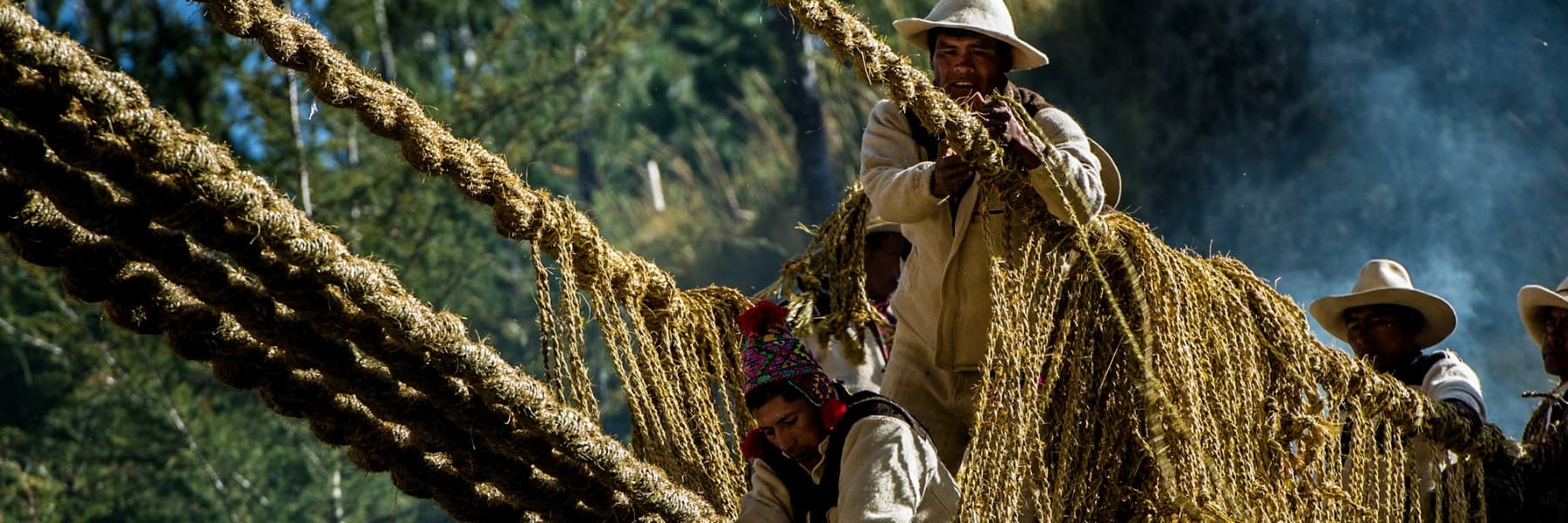
Spanish explorers admired the variety of bridges along the Qhapaq Ñan. In particular, the Europeans had never seen a suspension bridge and were surprised to find hundreds of them along the Inca Trail system. The Queswachaka, the last high Andean “Ichu” gras suspension bridge, spans a high ravine over the Apurimac River in Peru and has been in continuous use for 500 years. The bridge is 100 feet (30 meters) long and is suspended 50 feet (15 meters) above the river. It is made from grass fibers and other organic materials. Every year, 1,000 villagers from the four neighboring Quechua communities gather, twist, and hand-braid a native grass to make 10 miles (16 kilometers) of rope and then work continuously for four days to rebuild the bridge. Asking permission from the Apus (sacred mountains) and making offerings to Pachamama (Mother Earth) are important activities that take place in conjunction with the reconstruction of the bridge. The community also throws a party to celebrate the new bridge. The Queswachaka is a key component of the Qhapaq Ñan and a masterpiece of Inca engineering. It also serves as an important example of sustainable engineering, a living expression of the knowledge, practices and traditions that have been passed down through generations of the Quechua people in the Andes.
The most modern works caused the decline of the archaic rope bridges in the Andean mountain range, since it was no longer necessary for the Inca footbridges to be renewed in perpetuity. While some were replaced by highway bridges, traces of others can still be seen in rivers such as the Vilcanota. Q'eswachaka itself fell into disuse after a more solid and secure metal construction was built just a few meters away.
“In the 1960s and 1970s, members of the local communities abandoned the renovation of the bridge in the hope that the land would forgive them. As a mother, the Pachamama gets angry, annoyed, denies and punishes, but also pardons. «The peasants confess that in the course of those years they were punished with droughts, frosts, hurricane winds that destroyed the thatched roof of their homes, and also with the disease and death of their animals. Some penalties that forced the migration of certain heads of families to the city. Finally, after 12 years inactive, the tradition was reactivated.
Ceremonies and Ancestral Rites in the Construction of the Queswachaka Bridge
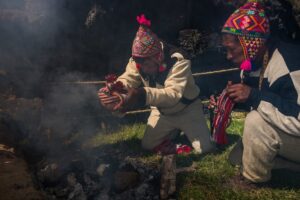
The place is impregnated with a smoky aroma due to the table that the paqo, or Andean priest, prepares next to one of the bases of the bridge. It is a kind of cloth altar with indigenous motifs in which the shaman deposits coca leaves, llama fetuses and food that he offers to the Pachamama through the sparkling flames.
"Like you or me, the Earth is hungry, and satisfying it is among our obligations as children. Well, it is the source of our sustenance," explains Cayetano Ccanahuire, a 63-year-old paqo who is credited with divinatory abilities, as well as medicine. andina–. Before the renovation of the bridge, the apus tell me each year what Pachamama's appetite is these days. Well, her tastes evolve and we don't always have to pay her with the same "delicacy", to which the locals are also invited. apus to implore your protection and avoid accidents during the renovation".
Installed next to the stone abutments during the three days that the renovation of the bridge lasts, the paqo will only be able to leave the place when the work is passable.
«Since pre-Columbian times, any important construction activity, both houses and bridges, has been carried out after payment to the land or to the apus. These last deities are embodied in each and every one of the geographical features of the area, such as lagoons, rivers or hills –explains the anthropologist of the Catholic University of Lima Pablo del Valle–. It is an appeal to the forces of nature in which they are implored to calm down to avoid damage, such as a rise in the river and the subsequent flooding of the fields. Even the modern bridges of the 20th century were built by paying the gods first!"
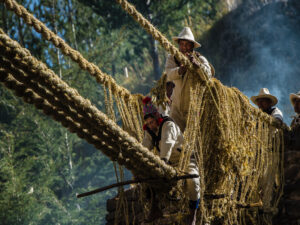
Queswachaka is the last Inca bridge in use, being also part of the extensive network of roads or Qapac Ñan recognized as "Cultural Heritage of Humanity" by UNESCO, it is the only Inca bridge that has survived so many generations for more than 500 years, which is almost in its original state and thanks to the decision of the participating communities: Huinchiri, Chaupibanda, Qollana Quehue and Chocayhua, which displaying their living culture repeat techniques and ceremonies of purely Andean origin, reproducing this wonderful event year after year. , as a paradox in time and showing the authenticity of our culture. For three days they will annually renew the Inca bridge of Q'eswachaka in the first days of June of each year.
First day:
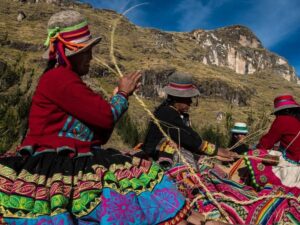
This day begins with an offering to the Apu Quinsallallawi in an ancestral ceremony. In this offering, the protector Apu is thanked for everything he has given to the communities; as well as protection is requested for all the workers who will enhance the braiding of the bridge. After that, the collection of braids from each family is done, as well as the corroboration of the 40 meters. Next, these ropes are laid around the road; for this, men and women from the Huichiri, Ccollana, Quehue, Chaupibanda and Choccayhua communities are present. Where the men do the strength work and the women stand around the bridge and start with the braiding of thin ropes.
After laying the ropes, it begins with the braiding of ropes, resulting in moderately thick ropes. Finally, the braiding or weaving of these medium ropes begins, turning them into thicker ropes or also called larger ropes, the same ones that will be at the base of the bridge and two others that will remain medium and will have the function of railings. At sunset these ropes are left at both ends of the bridge.
Second day:
This day also begins with an offering to the Apu and Pachamama. After the offering, a community member passes through the old bridge carrying a thin rope at his waist, the same one that will help with the transportation of the rest of the ropes that are at both ends; as well as other useful materials for placing the ropes and thus start the work on the construction of the bridge. Likewise, the ropes of the old bridge are cut, they will rest in the river gorge.
Once the ropes are obtained and supported at both ends, the specialist in the construction of the bridge or also called "chakaruwak", is in charge of supervising the tying of the larger ropes and those that will have the function of railings. These are tied in stones located at the beginning of the bridge, these stones are quite firm and stable to support the weight of the entire bridge structure. While all this work is being done, one of the communities is in charge of making the carpet; the same one that will be placed at the base of the bridge at the end of all the work; They are also responsible for carrying small branches called "Kallapos" that will serve to keep the same base stable.
Third day:
This day begins with the elaboration of the bridge, two specialists in this work are in charge of it, the same ones that are located at both ends and culminate in the middle of the bridge. The end of the work is announced with a brave cry.
The specialists in making the Queswachaka bridge or the "chakaruwak", are men who received such instructions from their parents; Likewise, this art is transmitted from generation to generation and if one of them has only daughters, this art will be transmitted only to a male member of the family, they can be nephews.
Fourth day:
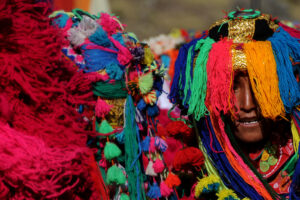
Finally, the communities also organize themselves for this day; To celebrate the completion of the bridge, each community performs different typical dances. Likewise, a gastronomic fair is held, with typical dishes from the region.
ESSENTIAL TRIP INFORMATIONESSENTIAL TRIP INFORMATION
ESSENTIAL TRIP INFORMATION ESSENTIAL TRIP INFORMATION
Want an in-depth insight into this trip? Essential Trip Information provides everything you need to know about this adventure and more.
View Essential Trip InformationBest Season to TravelBest Season to Travel
The best time to visit Peru is during the dry season, between May and November, when the weather is dry and bright, with more frequent rainfall occurring between November and April.
 January
 February
 March
March April
April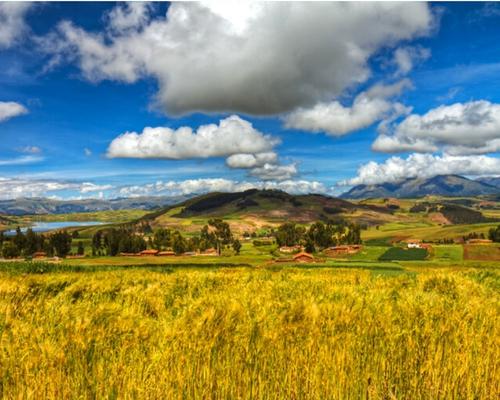 May
May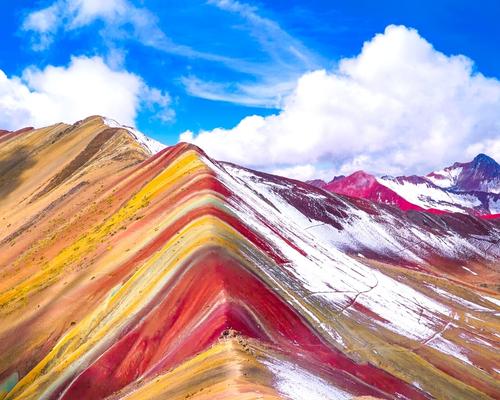 June
June July
July August
 September
 October
 November
 December
PRICE & AVAILABILITYPRICE & AVAILABILITY
PRICE & AVAILABILITY
To book this tour, a minimum of $ 190 USD per person is required, the remaining balance will be paid upon arrival in Peru, at the Cusco office.
Any other additional information, please coordinate with your travel agent.
Choose your preferred departure date to proceed.
What to expect from our
Cusco Tours
Nothing gets you closer to a country than walking through it, and we’ve got trips to suit walkers of all levels and interests.
HOW FIT DO I NEED TO BE?
All our Walking trips are graded from ‘Easy’ through to ‘Challenging to Tough’. On our online trip itineraries you’ll find a chart showing the daily walk distances, timings and information on the route including the terrain, altitude. Generally, no specific training is needed but you might feel more comfortable if you’ve got out walking a few times in the lead-up to your trip.
WHAT WILL THE GROUP BE LIKE?
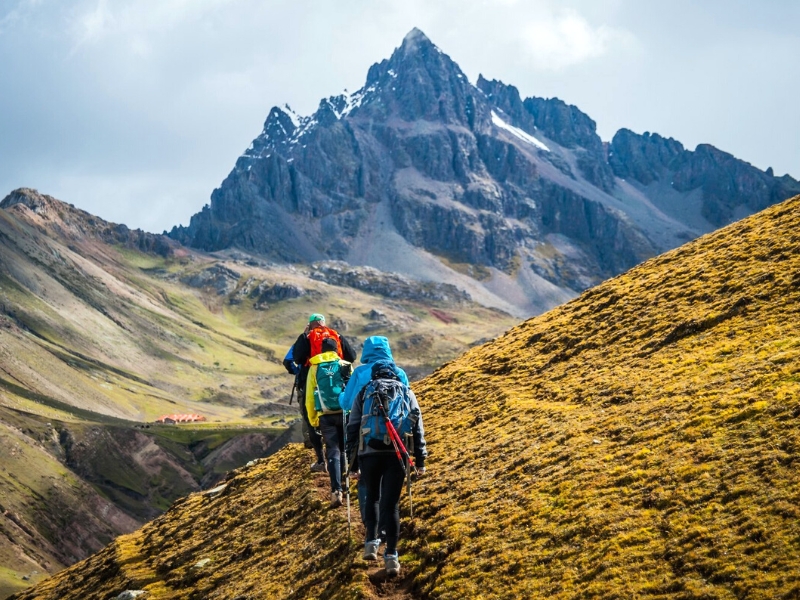
As with all our trips, every group is different but the ‘average’ group consists of roughly half couples and half solo travellers - all sharing a passion for exploring the world on foot. You’ll always have someone to keep you company along the route, but you don’t always have to walk together. Wherever possible your Andean Great Treks leader will allow everyone to walk at their own pace, regrouping regularly along the route.
IS PERU SAFE TO TRAVEL
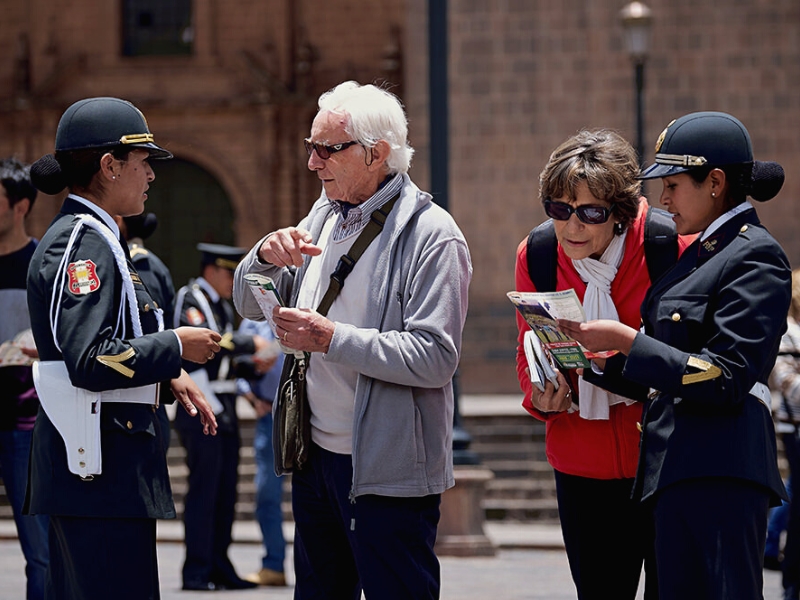
Like many other countries in developing destinations, the region’s beauty and uniqueness are countered by inequality and lack of investment. This has led to crime rates (mainly theft and scams) not being uncommon in the larger cities. We know this doesn’t sound very attractive, but it’s important to mention it regardless. Most experienced and well-traveled visitors will understand this well and not be too concerned. However, having said this, it is our duty to take care of you during your visit. That’s why we present you here with a few recommendations to be extra safe. Avoid walking alone at night on empty streets. Don’t flaunt valuables! If going for a walk or going on public transport, be sensible and avoid showing off expensive items such as expensive watches and jewelry. Be careful of pickpockets! Don’t leave your bags anywhere that doesn’t look safe, and make sure to take them with you.
MAY I SUFFER THE MOUNTAIN SICKNESS IN CUSCO?
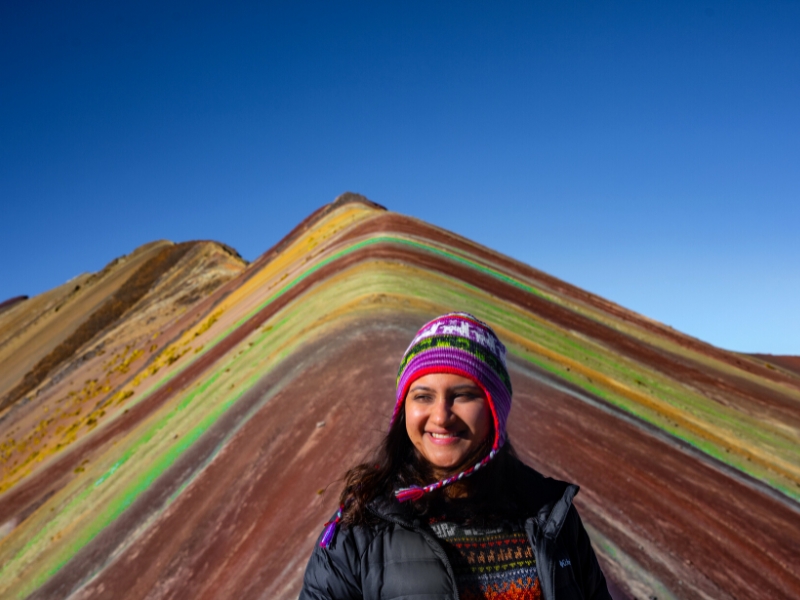
Soroche, or mountain sickness, is a reality for most people arriving in Cusco by plane from sea level and needs to be treated with respect. It’s vital to take it easy, not eating or drinking much on arrival, even sleeping a whole day just to assist acclimatization (coca tea is a good local remedy). After three days at this height most people have adjusted sufficiently to tackle moderate hikes at similar or lesser altitudes. Anyone considering hiking the major mountains around Cusco will need time to adjust again to their higher base camps.
If you do encounter altitude-related health problems, many hotels and restaurants have oxygen cylinders to help; alternatively, for serious cases, try call any of the clinics that are in Cusco, most of them have staff that speak English, for a greater facility in your attention it is recommended to have a travel insurance that covers medical expenses.
CUSCO DAY TOURS FAQs
HOW TO GET TO CUSCO?
International flights to the capital city of Lima are plentiful but once there, you need to find a way to Cusco which is about 1100 km (684 miles) away. The quickest way to get to Cusco from Lima is to fly – it takes about 55 minutes. I don’t recommend traveling by bus because it takes about 24 hours – only do it if you intend to break the journey along the way, to visit other places.
Renting a car to travel from Lima to Cusco is not recommended. The roads are rough, and you could find yourself lost or face to face with one of the other dangers that come with traveling in unfamiliar territory.
HOW CAN I VISIT THE SACRED VALLEY FROM CUSCO?
The easiest way to explore the Sacred Valley from Cusco is on a guided full day tour that picks you up and drops you off from your hotel. The market in Pisac and Inca ruins in Ollantaytambo are the principal stops, though travelers with more time on their hands will find plenty more to see and do. It’s also possible to take a local bus or taxi into the Sacred Valley and do independent exploration.
HOW CAN I VISIT RAINBOW MOUNTAIN FROM CUSCO?
Rainbow Mountain, or Vinicunca as it’s known by locals, has become a popular hike in the Cusco region. It’s possible to visit Rainbow Mountain in one (very long) day from Cusco or you can divide the trip into a two-day itinerary. While the hike isn’t very difficult and doesn’t have many steep inclines, Vinicunca is in a high elevation region (the highest part of the trail is 17,060 ft or 5,200 m) and you should spend time acclimating before starting the hike.
HOW MANY DAYS SHOULD I VISIT CUSCO?
We are not afraid to say that Cusco is a place where every traveler ends up at least once during the trip around Peru, and it is hard to tell what is the right length of stay.
If your primary reason why to visit Cusco is to get to Machu Picchu, you still should spend here at least two days to acclimatize (despite the fact Machu Picchu is at a lower elevation than Cusco, some people still suffer from altitude sickness), and during this time you can explore the city and Sacred Valley.
From our personal experience, we think that the longer you can stay in Cusco it is better. Some travelers with limited time even revolve their entire itinerary around Cusco - this only proves how rich the city is in terms of sightseeing, architecture, and activities.
Cusco has so many things to see and do, not only within the city limits but mostly outside, that it is not a problem to spend here weeks. If you are flexible, sit down, and write down all one-day and multi-day treks you would like to do from Cusco, and you should get the optimal number of days for you.
WHERE TO STAY IN CUSCO
There are so many things to see and do in Cusco and its surroundings that the city certainly deserves more than one day of your time.
To enjoy your days in Cusco the most, it is essential to choose the right accommodation. The good news is that Cusco has a great network of hotels for every type of traveler, from cheap hostels to luxurious mansions. That's why your only job is to find a hotel in a location that suits you the best.
We recommend staying close to Centro Historico unless you want to stay away from crowds. We've selected the three best hotels in Cusco, so feel free to get inspired.
- Budget | Cusco Bed and Breakfast - Spacious and clean rooms, comfortable beds, very quiet at night, excellent location.
- Mid-range | Tierra Viva Cusco Centro - Providing a tranquil environment, beautiful rooms and also has one of the top-rated locations in Cusco.
- Luxury | JW Marriott El Convento Cusco - The hotel features impressive interiors, has a charming colonial courtyard, luxury rooms, and Cusco’s cathedral or main square are only three blocks away.
WHAT TO EAT IN CUSCO
In recent years, Peruvian cuisine has gained popularity in the world’s culinary landscape, but for the freshest (and most authentic) specialty dishes, Cusco will not disappoint. Most Peruvian dishes carry big flavor not seen in other Latin and South American fare. You may have already tried popular dishes like ceviche (a cold dish of fresh raw fish with spicy citrus flavors) or lomo saltado (stir fried beef with fries). If you’re feeling a bit more adventurous, try Cuy (roasted guinea pig – yes, the American household pet) or charbroiled alpaca (also known as llama). Other delicious traditional dishes include adobo (a pork stew with corn beer), tamales, choclo con queso (boiled corn with local cheese) and the vegetarian stew capchi de setas. As far as vegetables go, Peru produces more than 4,000 varieties of potato, so you’ll find many dishes centered on them like papas a la huancaina (boiled potatoes with a spicy cheese sauce) and causa (a potato casserole with a variety of meat). Other staple veggies include corn and avocados. If your mouth isn't watering yet, check your pulse.
For a taste of traditional dishes, head to PACHAPAPA or the award-winning CHICHA (visitors and locals recommend getting reservations well in advance). Peruvian cuisine often mingles with Asian influences, inspired by the culture brought by indentured servants and immigrants who came to Peru dating back to the original Spanish rule in the country. For a sampling of the Asian/Peruvian fusion cuisine, visit LIMO. If you're really looking to splurge on a fine dining experience, try MAP Cafe. Located in the courtyard of the Pre-Columbian Art Museum in a glass shipping container, the fare is more contemporary Peruvian cuisine. You can also kick-start your day with coffee and breakfast at Jack's Cafe, which serves breakfast all day. Many of the most popular restaurants are centrally located near Plaza de Armas.
ANDEAN GREAT TREKS TOURS DIFFERENCE
UNRIVALLED KNOWLEDGE & EXPERIENCE
Every Andean Great Treks holiday has been thoughtfully planned and crafted by our specialists. They draw on their own extensive travel experience and the guidance and expertise of our local partners to create superb holidays. Our specialists are committed to making every aspect smooth and enjoyable; they genuinely want to ensure that the holidays they create leave you with wonderful lasting memories.
AMAZING TOURS & AUTHENTIC EXPERIENCES
Every Andean Great Treks traveller is accompanied by an experienced tour guide, you will be immersed in Historic cities, ancient ruins and unfamiliar landscapes are all brought to life by our carefully selected local guides. They want to share their expertise and help you make your own discoveries too; their sole mission is to ensure you enjoy every moment.
FLEXIBILITY & CHOICE
Giving you the freedom to make your holiday even more memorable. We know how much our customers look forward to their holiday and we pride ourselves on the choice and flexibility that we offer to enhance every aspect of your experience. Whether it’s getting to the airport, upgrading your room or booking an additional excursion, we can help.
GUIDED BY THE LOCAL GUIDES, TRUE EXPERTS!
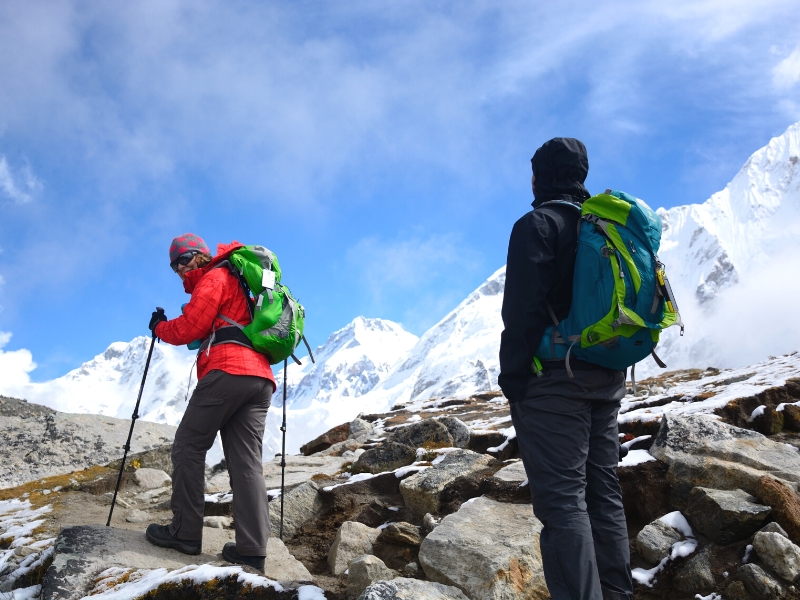
Our guides are the stars of the show; it is their unrivalled knowledge, passion and expertise that will transform your tour experience from good to truly extraordinary!
Because the have grown up in the area and know it like the back of their hand, so they can help you experience whichever aspects most interest you. They’re passionate about sharing their corner of the world with you, and as you explore together, they’ll open your eyes to the intricate details, provide background to enhance your understanding of what you’re seeing, and share stories that will bring everything to life.
ALL OF OUR NATIONAL TOUR GUIDES...
- Have at least five years guiding experience
- Are fluent in English
- Are born and raised in Cusco, Lima, Manu Jungle, Puno
- Go through rigorous and ongoing training programmes
- Are at your service 24 hours a day
OUR TRAVELS SHAPE YOURS
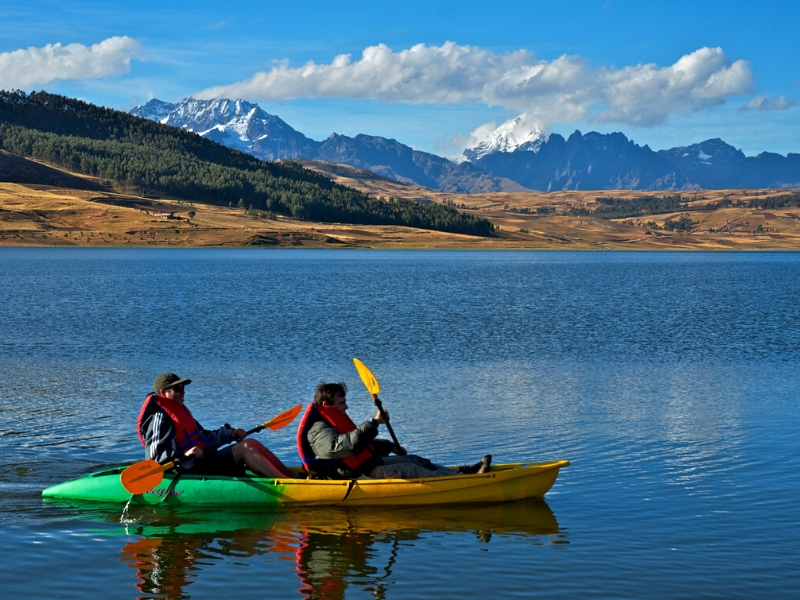
“Your inspiration for a trip can be a single word or a highly evolved outline, but it's the conversations we have that help us understand the experience you're looking for. Meanwhile, I'm looking back on the time I spent at the destination.
‘The great thing about working with a specialist at Andean Great Treks is how they take your complete jumble of ideas and turn them into something absolutely spectacular.’
As you begin to share your ideas with your specialist, it will connect them immediately back to a time in their own travels. Conjuring a picture of the rest time they made that same discovery, reminding them how it felt.
Your specialist understands that, when the journey is right, it has the power to excite your emotions in the most profound ways after all, that was the effect on them.
They carry a treasure box of moments, captured over many journeys, into every suggestion they’ll share with you, as they ask you how you want to feel on your trip.
MEANINGFUL EXPERIENCES, REAL CONNECTIONS
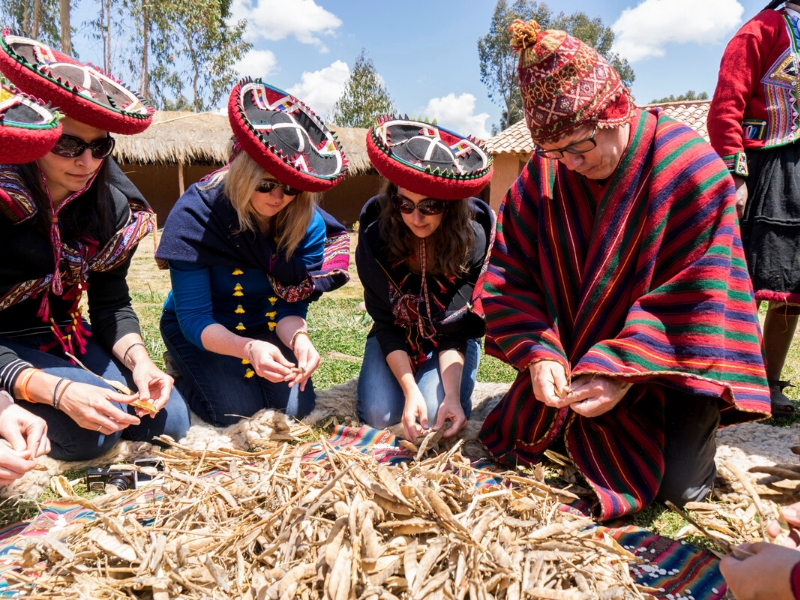
EXPERIENCES THAT CALL TO YOU
It’s what you do in a destination that helps bring it to life. It’s why we strive to choose experiences that help you connect to a place, absorbing a little of its complex character. Wherever your passions lie, we’ll recommend experiences that speak to you, and we’ll recommend the guide or local expert who’s most qualified to help you explore. Packing your holiday full of special experiences means some early starts and long days, but you can be sure that you’ll return home with many incredible memories! Read our Tours and check the Physical Ratings to see if the pace and activity levels are right for you.
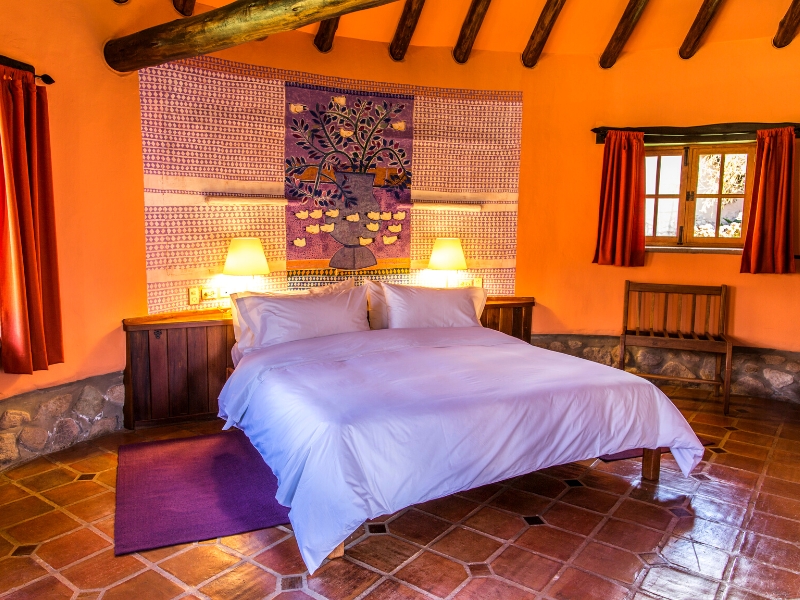
STAYS WITH DIFFERENCE
We know that where you stay is a cherished part of your travels. So, we go to great lengths to find places to stay that exceed expectations, or go above and beyond the ordinary, whether in their character, hospitality, or location. Over the years, we’ve discovered the very best properties, trying and testing them, so we can choose the right one for you. We’ve nourished long-standing relationships with these establishments and the people who founded them, and we’ve stayed there many times often, we’ll even know which rooms have the best views (and reserve them for you).
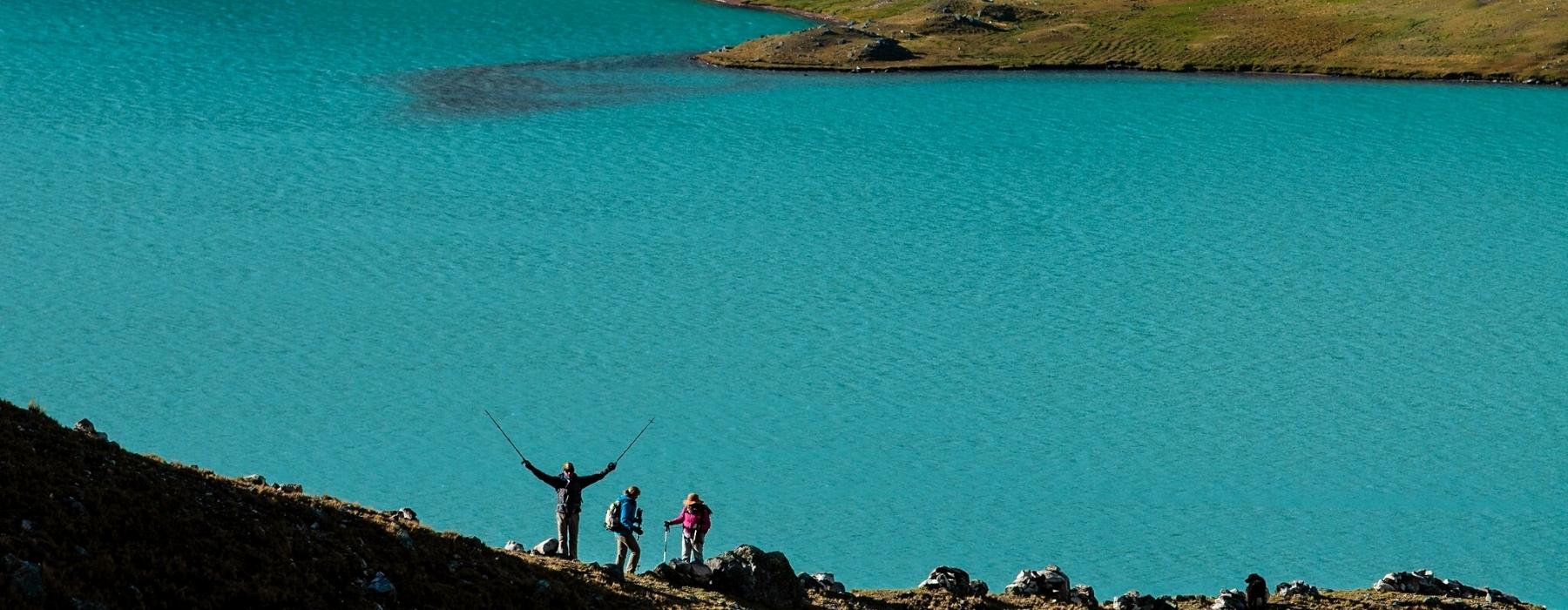
TRAVELLING THE RIGHT WAY
Our style of travel — authentic, thoughtful, and focused on building meaningful connections to the people and places you visit — is inherently respectful and considerate of the destinations we love. We design each aspect of your trip exactly as you want it, which includes its sustainability. That might mean choosing a train journey instead of a flight, staying at eco-friendly wildlife lodges, or opting for experiences that give back to the communities you’re visiting. The choice is yours.
Responsible travel has always been at the heart of what we do. First and foremost, because it gives you the best experience, but, also because it helps to preserve the communities and landscapes you visit. This isn’t new for us we collaborated with local communities and outside experts so we can grow to be better ambassadors.
The most authentic and interesting experiences often directly benefit the local people. We prefer to buy local products that are produced in the organic farms of the Sacred Valley, we also have alliances with local artisan organizations who provide us with souvenir items for our clients, your money directly benefits the local economy.
Our style of travel — authentic, thoughtful, and focused on building meaningful connections to the people and places you visit — is inherently respectful and considerate of the destinations we love. We design each aspect of your trip exactly as you want it, which includes its sustainability. That might mean choosing a train journey instead of a flight, staying at eco-friendly wildlife lodges, or opting for experiences that give back to the communities you’re visiting. The choice is yours.
Responsible travel has always been at the heart of what we do. First and foremost, because it gives you the best experience, but, also because it helps to preserve the communities and landscapes you visit. This isn’t new for us we collaborated with local communities and outside experts so we can grow to be better ambassadors.
The most authentic and interesting experiences often directly benefit the local people. We prefer to buy local products that are produced in the organic farms of the Sacred Valley, we also have alliances with local artisan organizations who provide us with souvenir items for our clients, your money directly benefits the local economy.
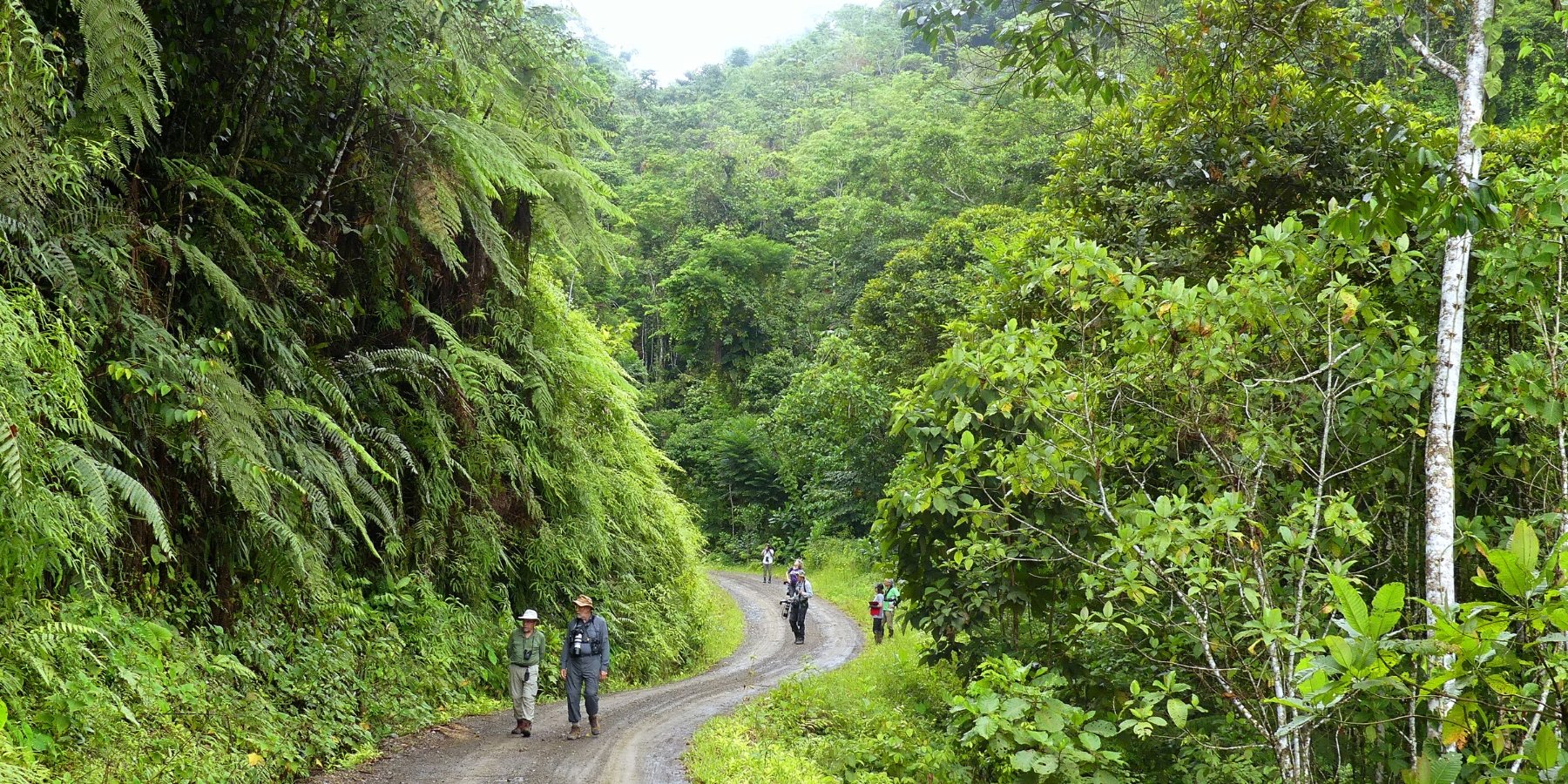
WE EXPLORE WITHOUT AFFECTING THE ECOSYSTEM
We want travel to change us, and not the World
‘There’s a saying: we don’t inherit the Earth from our ancestors, we borrow it from our children. When we show you our country, this philosophy guides everything we do. It’s our responsibility to preserve the environment and wildlife, and support communities. That means using slower modes of transport, like cycling, employing local people, and working with communities who’ll benefit directly from your visit. This also gives you the best, most authentic impression of the places we want to share with you.
We prefer to buy local products in ecological bags, to avoid the use of plastic bags, likewise we teach the use of soaps and ecological products in each tour that we organize. We also work on reforestation projects with local communities who take care of landscape resources such as communal reserves, national parks.
We want travel to change us, and not the World
‘There’s a saying: we don’t inherit the Earth from our ancestors, we borrow it from our children. When we show you our country, this philosophy guides everything we do. It’s our responsibility to preserve the environment and wildlife, and support communities. That means using slower modes of transport, like cycling, employing local people, and working with communities who’ll benefit directly from your visit. This also gives you the best, most authentic impression of the places we want to share with you.
We prefer to buy local products in ecological bags, to avoid the use of plastic bags, likewise we teach the use of soaps and ecological products in each tour that we organize. We also work on reforestation projects with local communities who take care of landscape resources such as communal reserves, national parks.
DISCOVER MORE SIMILAR TOURS: TOUR TO QUESWACHAKA INCA BRIDGE 1 DAY

TRAINING HIKE TO DO CLASSIC INCA TRAIL 1 DAY
Take a preparation walk before starting the classic Inca trail to Machu Picchu. Explore mountain landscapes in the sacred valley of the Incas with your local guide. We have daily departures all year round.

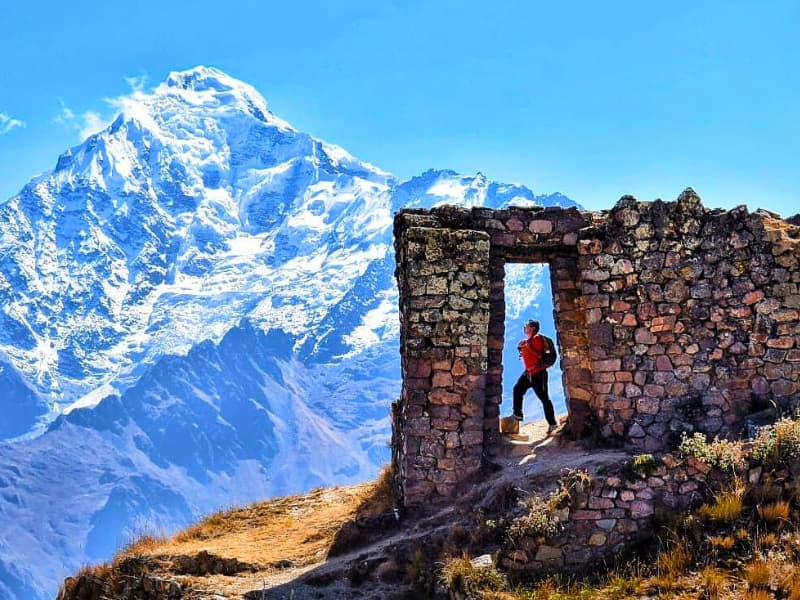
HIKE TO INCA SUN GATE 1 DAY
Visit the sacred gate of the Incas on the Cachichata mountain, from there you can enjoy beautiful views of the sacred valley of the Incas and its snow-capped peaks.

SOUTH VALLEY OF CUSCO HALF DAY
Explore the beautiful South Valley of Cusco, this circuit offers you to appreciate the hydraulic technology of the Incas, the ancient city of the Wari culture. The majestic Sistine Chapel of Andahuaylillas, in a half day tour with the best guides in Cusco.